
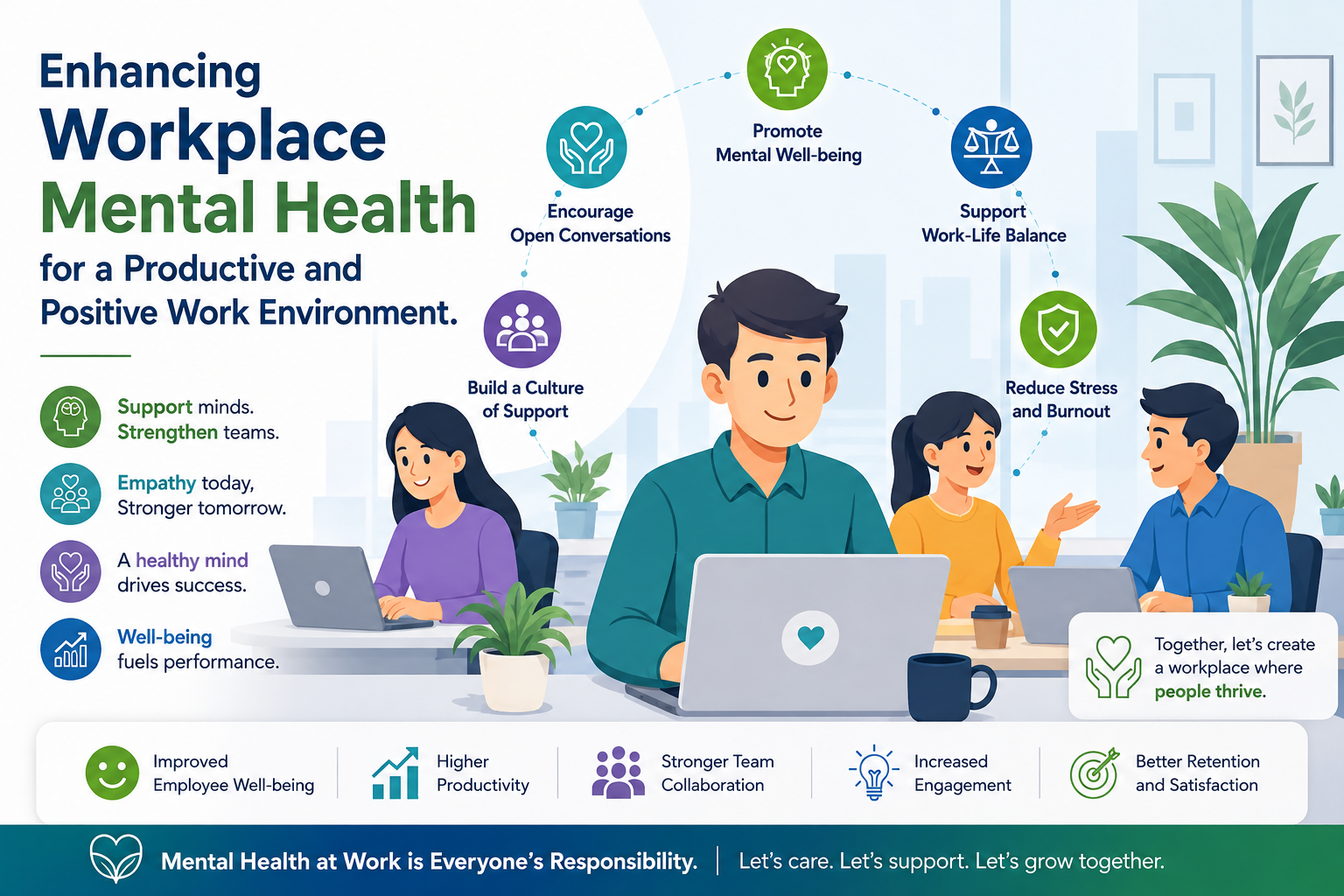
Enhancing Workplace Mental Health for a Productive and Positive Work Environment
Workplace mental health is a critical aspect of overall employee well-being and organizational success. In today’s fast-paced and demanding work environments, it’s more important than ever to prioritize mental health. In this blog, we will explore the significance of workplace mental health, common challenges, and effective strategies to foster a supportive and healthy work culture.
The Importance of Workplace Mental Health: A mentally healthy workplace is not only beneficial for employees but also for the organization. Employees who are mentally healthy are more productive, engaged, and motivated. They are better able to cope with stress, work collaboratively, and contribute to a positive work environment. Conversely, poor mental health can lead to absenteeism, decreased productivity, and higher turnover rates.
- Stress: High workloads, tight deadlines, and long hours can contribute to chronic stress, which negatively impacts mental health.
- Burnout: Continuous stress without adequate recovery can lead to burnout, characterized by exhaustion, cynicism, and reduced professional efficacy.
- Anxiety and Depression: Workplace pressures can exacerbate or trigger anxiety and depression, affecting employees’ ability to perform their tasks effectively.
- Work-Life Balance: Struggling to balance professional responsibilities with personal life can lead to mental health issues.
- Create a Supportive Environment:
- Encourage open communication about mental health and reduce stigma by normalizing conversations around it.
- Provide training for managers and employees on recognizing and addressing mental health issues.
- Offer Mental Health Resources:
- Provide access to Employee Assistance Programs (EAPs) that offer counselling and support services.
- Ensure employees are aware of mental health resources and how to access them.
- Promote Work-Life Balance:
- Encourage employees to take regular breaks and utilize their vacation time.
- Implement flexible work arrangements, such as remote work options and flexible hours, to help employees manage their personal and professional lives better.
- Reduce Work-Related Stress:
- Manage workloads effectively and ensure tasks are distributed fairly.
- Set realistic goals and deadlines to prevent excessive pressure on employees.
- Foster a Positive Work Culture:
- Recognize and reward employees for their contributions and achievements.
- Encourage teamwork and collaboration to build a sense of community and support among employees.
- Provide Mental Health Training:
- Offer workshops and training sessions on stress management, resilience, and mindfulness.
- Equip employees with skills to manage their own mental health and support their colleagues.
In three words I can sum up everything I’ve learned about life: it goes on.
– Robert Frost
Case Study:
TechCorp’s Mental Health Initiative: TechCorp, a leading technology company, recognized the impact of workplace stress on their employees and decided to take action. They implemented a comprehensive mental health program that included the following elements:
- Mental Health Days: Employees were given additional days off specifically for mental health.
- Wellness Workshops: Regular workshops on mindfulness, stress management, and resilience were conducted.
- Flexible Work Options: Employees could choose to work remotely or adjust their work hours to better suit their personal needs.
- On-Site Counselling: An on-site counsellor was available for confidential consultations.
As a result, TechCorp saw a 20% reduction in absenteeism, improved employee morale, and increased productivity. Employees reported feeling more supported and valued, contributing to a more positive work environment.
Conclusion: Prioritizing workplace mental health is essential for creating a productive, positive, and resilient workforce. By implementing supportive policies, offering resources, and fostering an open and inclusive culture, organizations can enhance the well-being of their employees. Remember, a mentally healthy workplace benefits everyone – employees, employers, and the organization as a whole. Investing in mental health is not just a compassionate choice; it’s a strategic one that leads to sustainable success.
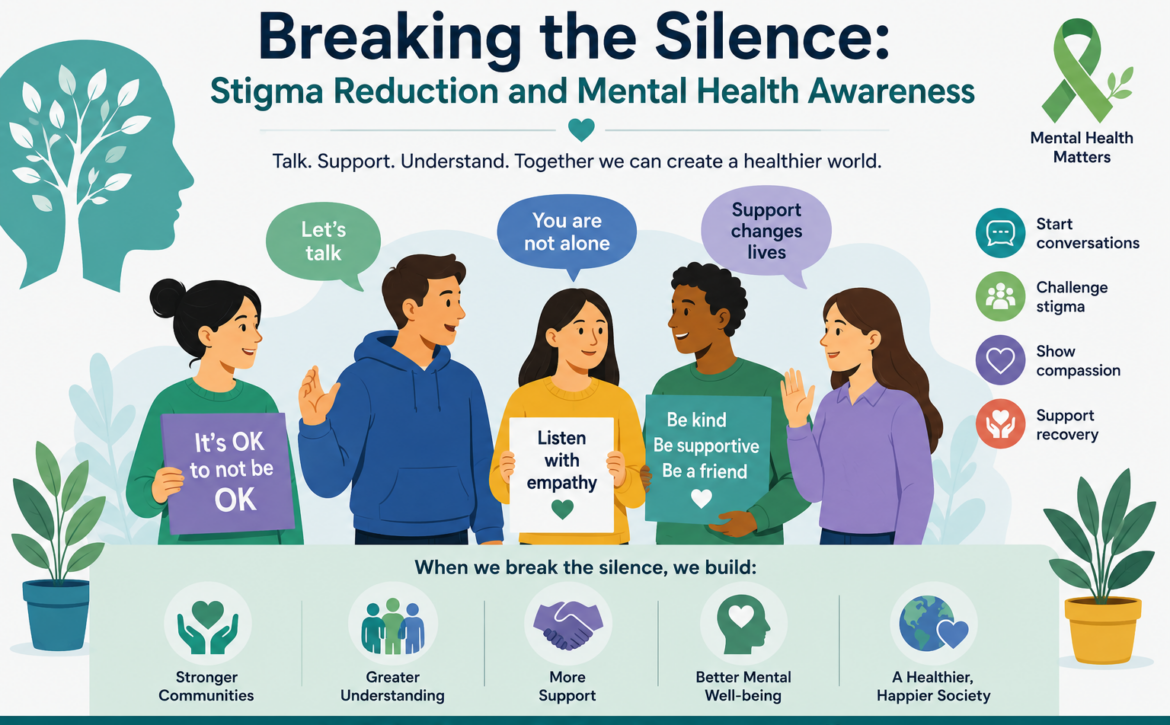
Breaking the Silence: Stigma Reduction and Mental Health Awareness
Mental health is an integral part of our overall well-being, yet stigma and lack of awareness continue to hinder many people from seeking the help they need. Stigma reduction and mental health awareness are crucial steps toward creating a society where individuals feel supported and empowered to prioritize their mental health. In this blog, we will discuss the impact of stigma, the importance of awareness, and effective strategies to promote a more understanding and accepting community.
Understanding Stigma: Stigma refers to the negative attitudes, beliefs, and behaviours directed toward individuals with mental health conditions. It often stems from misconceptions and lack of knowledge about mental health issues. Stigma can manifest in various ways, including:
- Social Stigma: Negative stereotypes and discrimination from others.
- Self-Stigma: Internalized shame and guilt experienced by individuals with mental health conditions.
- Structural Stigma: Institutional policies and practices that disadvantage individuals with mental health issues.
The Impact of Stigma: Stigma has profound consequences on individuals with mental health conditions. It can lead to:
- Reluctance to Seek Help: Fear of judgment or discrimination prevents many people from accessing the care they need.
- Isolation: Stigma can cause individuals to withdraw from social interactions, exacerbating feelings of loneliness and depression.
- Reduced Opportunities: Discrimination in the workplace, education, and other areas of life can limit opportunities for those with mental health conditions.
- Worsening of Symptoms: Avoiding treatment and support can lead to the deterioration of mental health.
The Importance of Mental Health Awareness: Raising awareness about mental health is essential for reducing stigma and encouraging individuals to seek help. Awareness involves educating the public about mental health conditions, their prevalence, and the importance of treatment and support. Key benefits include:
- Increased Understanding: Awareness campaigns can dispel myths and provide accurate information about mental health conditions.
- Empowerment: Educating individuals about mental health can empower them to take proactive steps toward their well-being.
- Supportive Communities: Awareness fosters empathy and support, creating environments where individuals feel safe to discuss their mental health.
Strategies for Stigma Reduction and Awareness:
- Education and Training:
- Implement educational programs in schools, workplaces, and communities to teach about mental health and combat stigma.
- Provide training for healthcare professionals to ensure they offer compassionate and non-discriminatory care.
- Public Awareness Campaigns:
- Launch campaigns that use various media platforms to spread awareness about mental health conditions and encourage open conversations.
- Highlight stories of individuals who have successfully managed their mental health conditions to inspire and educate others.
- Peer Support Programs:
- Develop peer support groups where individuals with similar experiences can share their stories and offer mutual support.
- Encourage people with lived experiences to become mental health advocates and share their journeys publicly.
- Mental Health Resources:
- Increase accessibility to mental health resources, including hotlines, online support, and counselling services.
- Ensure that information about mental health services is widely available and easily accessible.
- Policy and Advocacy:
- Advocate for policies that protect the rights of individuals with mental health conditions and promote mental health awareness.
- Work with organizations and governments to implement changes that reduce structural stigma and improve mental health care.
- Community Engagement:
- Organize community events, such as mental health fairs, workshops, and seminars, to raise awareness and provide support.
- Collaborate with local organizations, businesses, and influencers to amplify the message of mental health awareness.
Case Study: Mindful Communities Initiative: The Mindful Communities Initiative is a successful example of a community-based approach to reducing stigma and raising mental health awareness. This initiative involved the following actions:
- School Programs: Workshops and seminars were conducted in schools to educate students and teachers about mental health.
- Public Campaigns: A series of public awareness campaigns using social media, posters, and local events helped spread the message.
- Support Groups: Peer support groups were established, providing safe spaces for individuals to share their experiences.
- Training for Professionals: Healthcare providers and first responders received specialized training to improve their understanding and treatment of mental health issues.
As a result, the community reported a significant increase in mental health awareness, reduced stigma, and higher rates of individuals seeking mental health services.
Conclusion: Stigma reduction and mental health awareness are vital for creating a supportive and understanding society. By educating the public, advocating for policy changes, and fostering open conversations, we can break down the barriers that prevent individuals from seeking the help they need. Remember, mental health is just as important as physical health, and together, we can create a world where everyone feels empowered to take care of their mental well-being.
Learn More